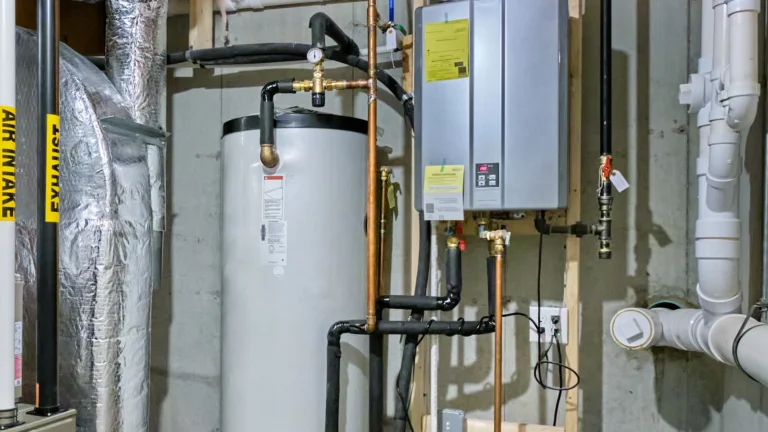
Water Heaters for Homes Across Northeast Colorado
Hot water is one of those essentials that most homeowners take for granted until it stops working. Whether you are running a morning shower, filling the dishwasher after dinner, or doing a load of laundry, reliable hot water is central to daily comfort. At Colorado’s Finest Heating and Air Conditioning, we install, repair, and maintain water heaters for residential customers throughout Longmont, Boulder, Erie, Johnstown, Lafayette, Louisville, and the surrounding communities. As a full-service mechanical company that also offers plumbing services, we bring a depth of expertise to every water heater project that single-trade contractors simply cannot match.
The Varrell family have been in business and trade services for over 20 years, and since Colorado’s Finest Heating and Air Conditioning was started in 2011, we have built our reputation on quality work at an affordable price. Our satisfied customers have allowed us to rely on repeat and referral business over the last ten years, and water heater installations and repairs remain among the most frequently requested services we provide. We believe in keeping overhead expenses down so we can offer the best products at the best prices for our consumers while ensuring excellent service from start to finish.
Types of Water Heaters We Install and Service
Choosing the right water heater depends on household size, hot water demand, fuel availability, and energy efficiency goals. We work with the leading equipment manufacturers to provide options that fit every situation. Conventional tank water heaters remain the most common type in American homes. These units store between 30 and 80 gallons of preheated water in an insulated tank, ready for immediate use. Modern tank models have improved dramatically in efficiency, with many carrying Energy Factor ratings above 0.90 for gas units and even higher for electric models. We size each tank carefully based on the number of bathrooms, occupants, and peak-hour usage so homeowners never run out of hot water during high-demand periods.
Tankless water heaters, also called on-demand units, heat water only as it flows through the system. Because there is no standby heat loss from a stored tank, tankless models can reduce energy consumption by 24 to 34 percent for homes that use 41 gallons of hot water or less per day, according to the U.S. Department of Energy. We install both gas-fired and electric tankless systems, and we take the time to evaluate incoming water temperature, flow rate requirements, and gas line capacity before recommending a specific unit. In Colorado, where incoming groundwater temperatures can dip into the low 40s during winter, proper sizing is especially critical for tankless performance.
Signs Your Water Heater Needs Attention
Water heaters do not always fail all at once. In many cases, they send warning signals well before a complete breakdown. Rusty or discolored water coming from hot taps often points to corrosion inside the tank or deteriorating anode rods. Rumbling or popping sounds during heating cycles typically indicate sediment buildup on the bottom of the tank, which forces the burner to work harder and shortens equipment life. Inconsistent water temperature, slow recovery times, and visible moisture or pooling around the base of the unit are additional red flags that should prompt a professional inspection.
We make sure our technicians are knowledgeable in all aspects of our trade, as well as provided with continual education to ensure outstanding service and equipment installation procedure. When we arrive for a water heater service call, we perform a thorough diagnostic assessment that includes checking the thermostat settings, inspecting the burner assembly or heating elements, testing the temperature and pressure relief valve, and examining all plumbing connections for leaks. Our enthusiastic technicians are eager to provide outstanding customer service and are happy to answer your questions about repair options versus full replacement.
The Water Heater Installation Process
A professional water heater installation involves far more than simply swapping one unit for another. Our process begins with an in-home evaluation where we assess the existing setup, measure the available space, verify gas line sizing or electrical circuit capacity, and discuss the homeowner’s hot water needs. We then recommend equipment that balances performance, longevity, and budget.
On installation day, we safely disconnect and drain the old unit, remove it from the premises, and prepare the area for the new equipment. For tank-style heaters, we install new water supply connections, verify proper venting for gas models, and ensure the temperature and pressure relief valve discharge pipe is routed safely. For tankless installations, additional steps may include upgrading the gas line diameter, installing dedicated venting, and adding a condensate drain for high-efficiency condensing units. Every installation is tested thoroughly before we leave, including checking for gas leaks, verifying proper ignition and flame characteristics, and confirming hot water delivery at all fixtures.
Maintenance That Extends Equipment Life
The average tank water heater has a service life of eight to twelve years, while tankless models can last twenty years or more with proper maintenance. Routine service is the single most effective way to protect that investment and avoid unexpected failures. We recommend annual maintenance visits that include flushing the tank to remove sediment, inspecting and replacing the sacrificial anode rod when necessary, testing the temperature and pressure relief valve, and cleaning burner components or descaling heat exchangers on tankless units.
Sediment accumulation is a particular concern in parts of northeast Colorado where water hardness levels can be elevated. Mineral deposits insulate the bottom of the tank from the burner flame, forcing the system to consume more energy and accelerating wear on the tank lining. For tankless systems, scale buildup inside the heat exchanger restricts flow and reduces efficiency. Regular descaling with a vinegar solution or commercial descaler keeps the unit operating at peak performance.
Energy Efficiency and Emerging Technology
The water heating industry is evolving rapidly, driven by tighter energy codes and consumer demand for lower utility bills. Heat pump water heaters represent one of the most significant advances in recent years. These units extract heat from the surrounding air and transfer it to the water, achieving efficiency ratings two to three times higher than conventional electric resistance heaters. While the upfront cost is higher, the energy savings can offset the difference within a few years, especially in homes with moderate to high hot water usage.
We stay current with these developments so we can offer informed guidance to every homeowner we serve. Here are some of the key factors we help customers evaluate when selecting a new water heater:
- Fuel type and availability including natural gas, propane, and electric options based on existing utility connections
- First-hour rating and flow rate to ensure the unit can meet peak demand without running short
- Energy Factor or Uniform Energy Factor which measures overall efficiency and directly impacts operating costs
- Physical dimensions and installation location because newer high-efficiency models may require different clearances or venting configurations
- Warranty coverage and expected service life to help homeowners understand the true long-term value of their investment
- Local building code requirements including permits, expansion tanks, and earthquake strapping where applicable
Why Work With Us for Your Water Heater Needs
Our local family-owned business believes in keeping things simple and effective while offering best practices and quality materials to our customers. We take our careers seriously, and that commitment shows in every water heater we install, repair, or maintain. From the initial consultation through final testing, we treat every home as if it were our own. Whether you need an emergency repair on a failed unit or you are planning a proactive upgrade to a more efficient system, we are ready to help homeowners throughout Longmont, Boulder, Erie, Johnstown, Lafayette, and Louisville. We appreciate your interest and look forward to working with you. Contact us today.