Understanding Circuits in Your Heating and Cooling Systems
Every heating and cooling system in your home relies on a complex network of electrical circuits to operate safely and efficiently. Whether you are running your air conditioner during a sweltering Boulder summer or keeping your furnace humming through a frigid Longmont winter, circuits are the foundational infrastructure that makes it all possible. At Colorado’s Finest Heating and Air Conditioning, we take our careers seriously, and that means our technicians are knowledgeable in all aspects of our trade, including the intricate electrical components that power modern HVAC equipment. Understanding how circuits work can help you recognize early warning signs of trouble, make informed decisions about repairs, and protect both your family and your investment.
What Are HVAC Circuits and Why Do They Matter?
In the simplest terms, a circuit is a closed loop through which electrical current flows to power a device or component. In HVAC systems, circuits manage everything from the thermostat signal that tells your system to turn on, to the high-voltage power supply that drives your compressor and blower motor. A typical residential air conditioning or heating system uses both low-voltage control circuits, usually operating at 24 volts, and line-voltage circuits that run at 120 or 240 volts. Each of these circuits must be properly sized, wired, and protected by breakers or fuses to prevent dangerous conditions like overheating, electrical fires, or equipment damage.
The importance of properly functioning circuits cannot be overstated. According to the Electrical Safety Foundation International, electrical malfunctions account for more than 50,000 home fires each year in the United States. HVAC systems are among the most power-intensive appliances in any home, and faulty wiring, overloaded circuits, or degraded connections can contribute to these statistics. When we serve homeowners across Erie, Johnstown, Lafayette, Louisville, and surrounding communities in northeast Colorado, we ensure that every circuit involved in your heating or cooling system meets current safety codes and manufacturer specifications.
Key Circuit Components in Heating and Cooling Equipment
Your HVAC system contains several distinct circuits that work in coordination. The control circuit is the brain of the operation, connecting your thermostat to the equipment and signaling when to start and stop heating or cooling cycles. This low-voltage circuit typically runs through a transformer that steps down household power to a safe 24-volt level. When your thermostat detects that the indoor temperature has drifted from your desired setpoint, it closes the control circuit, sending a signal to the furnace, heat pump, or air conditioner to begin operating.
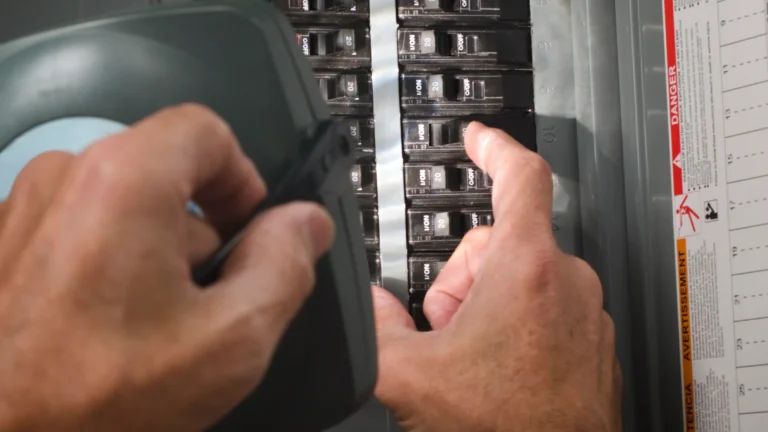
The power circuit is where the heavy lifting happens. Compressors in air conditioning systems and heat pumps usually require a dedicated 240-volt circuit with its own breaker in the electrical panel. Furnace blower motors may run on 120-volt circuits, though variable-speed and high-efficiency models sometimes require 240 volts as well. Each of these circuits includes safety devices such as fuses, circuit breakers, and limit switches that interrupt the flow of electricity if conditions become unsafe. As a full-service mechanical company that also offers plumbing services, we understand the interconnected nature of home systems and how electrical issues in one area can affect performance in another.
Common Circuit Problems We Diagnose and Repair
Over the last ten years, our satisfied customers have allowed us to rely on repeat and referral business, and a significant number of the service calls we handle involve circuit-related issues. Some of the most frequent problems we encounter include tripped breakers caused by compressor hard starts, corroded connections in outdoor condensing units exposed to Colorado’s variable weather, failed capacitors that prevent motors from starting, and blown low-voltage fuses in furnace control boards. Each of these issues points back to a circuit that is not functioning as designed.
When a breaker trips repeatedly, many homeowners simply reset it and move on. However, this is often a symptom of a deeper problem such as a short circuit within the equipment, a ground fault, or an aging compressor drawing excessive amperage. Our technicians use professional-grade multimeters, amp clamps, and megohm meters to trace circuits, measure electrical values, and pinpoint the exact source of trouble. We believe in keeping our business simple and effective while offering best practices and quality materials to our customers, so we always explain our findings in plain language before recommending any repair.
- Tripped circuit breakers often indicate compressor issues, short circuits, or overloaded wiring that needs immediate professional evaluation
- Blown control fuses typically result from a short in the thermostat wiring or a failed component on the furnace control board
- Corroded wire connections increase electrical resistance, generate heat, and reduce system efficiency over time
- Failed capacitors prevent motors and compressors from starting or running at proper speed, placing stress on the entire circuit
- Loose terminal connections can cause intermittent operation and arcing that damages contactors, relays, and control boards
- Ground faults occur when current escapes its intended path, posing safety hazards and causing repeated breaker trips
Dedicated Circuits and System Installation
When we install new heating and cooling equipment in homes throughout Longmont, Boulder, and the surrounding northeast Colorado region, proper circuit sizing and installation are among our top priorities. The National Electrical Code requires that air conditioning condensing units and heat pumps be served by dedicated circuits, meaning no other appliances share that breaker. The wire gauge, breaker amperage, and disconnect specifications must all match the equipment manufacturer’s requirements. Installing a high-efficiency system on an undersized circuit is not only a code violation but can lead to premature equipment failure and void your warranty.
The Varrell family has been in business and trade services for over twenty years, and Colorado’s Finest Heating and Air Conditioning was started in 2011 with the effort to provide quality work at an affordable price. That experience has taught us that cutting corners on electrical work during installation is one of the most costly mistakes a contractor can make. We ensure that every installation includes proper circuit verification, secure connections, and thorough testing of all electrical components before we consider a job complete. Our local family-owned business believes in keeping overhead expenses down to provide the best products at the best prices for our consumers while ensuring excellent service.
The Future of HVAC Circuits and Smart Technology
The HVAC industry is evolving rapidly, and circuit technology is evolving with it. Modern systems increasingly incorporate variable-frequency drives, electronically commutated motors, and smart control boards that communicate digitally with Wi-Fi-enabled thermostats. These advanced circuits allow systems to modulate output precisely, running at partial capacity rather than cycling fully on and off. The result is dramatically improved energy efficiency, quieter operation, and more consistent indoor comfort. The U.S. Department of Energy estimates that heating and cooling account for roughly 43 percent of a typical home’s energy use, making circuit efficiency a meaningful factor in reducing utility bills.
As these technologies become standard across the industry, continual education is essential. We make sure our technicians are provided with ongoing training to stay current with evolving circuit designs, diagnostic protocols, and installation procedures. Whether you need AC repair, heating repair, heating service, or AC service, our enthusiastic technicians are eager to provide outstanding customer service and are happy to answer your questions. We appreciate your interest and look forward to working with you on any circuit-related concern, from a simple breaker issue to a complete system installation requiring dedicated electrical work. Contact us today.